

How to measure the cutting accuracy of a Bridge Saw Cutter?
Dec 22, 2025
Leave a message
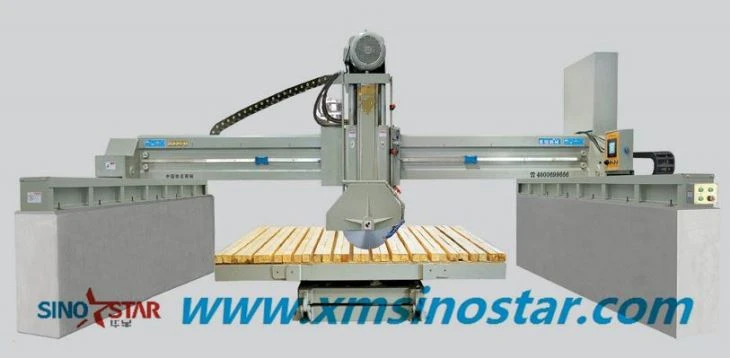
As a supplier of Bridge Saw Cutters, I understand the critical importance of cutting accuracy in the stone processing industry. In this blog, I'll share some effective methods to measure the cutting accuracy of a Bridge Saw Cutter, which will not only help you evaluate the performance of the equipment but also guide you in making informed purchasing decisions.
Understanding the Basics of Cutting Accuracy
Cutting accuracy refers to the degree of conformity between the actual cutting result and the desired cutting dimensions and shape. High - precision cutting is essential for creating high - quality stone products, such as countertops, floor tiles, and decorative elements. Inaccurate cutting can lead to wasted materials, increased production costs, and unsatisfactory end - products.
Measuring Linear Cutting Accuracy
One of the most fundamental aspects of cutting accuracy is linear cutting, which involves cutting straight lines. To measure the linear cutting accuracy of a Bridge Saw Cutter, you can follow these steps:
1. Prepare the Measuring Tools
You will need a high - precision measuring tape or a laser distance meter. Make sure the measuring tools are calibrated correctly before use. A calibration certificate can be obtained from the manufacturer or a professional calibration service.

2. Set the Cutting Parameters
Program the Bridge Saw Cutter to cut a straight line of a specific length, for example, 1000 mm. Make sure the stone slab is properly fixed on the worktable to prevent any movement during the cutting process.
3. Perform the Cutting
Start the Bridge Saw Cutter and let it complete the cutting operation. After the cutting is finished, carefully remove the cut piece from the worktable.
4. Measure the Cut Length
Use the measuring tape or laser distance meter to measure the actual length of the cut piece. Compare the measured length with the programmed length. The difference between the two values is the linear cutting error. For example, if the programmed length is 1000 mm and the measured length is 1001 mm, the linear cutting error is + 1 mm.
5. Calculate the Accuracy
The linear cutting accuracy can be expressed as a percentage. Divide the linear cutting error by the programmed length and multiply by 100. In the above example, the linear cutting accuracy is (1 / 1000)×100 = 0.1%. A lower percentage indicates higher cutting accuracy.
Measuring Angular Cutting Accuracy
In addition to linear cutting, Bridge Saw Cutters are often required to cut at specific angles. Measuring angular cutting accuracy is a bit more complex but equally important.
1. Use a Protractor or Angle Gauge
A high - precision protractor or angle gauge is needed to measure the angle of the cut. Similar to the linear measuring tools, these angle - measuring tools should be calibrated regularly.
2. Program the Angle
Program the Bridge Saw Cutter to cut at a specific angle, such as 45 degrees. Ensure that the cutting blade is properly aligned and the stone slab is positioned correctly.
3. Perform the Cutting
Start the cutting process and let the machine complete the angular cut. After cutting, remove the cut piece.
4. Measure the Angle
Place the protractor or angle gauge on the cut edge of the stone piece and measure the actual angle. Compare the measured angle with the programmed angle. The difference between the two is the angular cutting error. For example, if the programmed angle is 45 degrees and the measured angle is 45.1 degrees, the angular cutting error is + 0.1 degrees.
5. Evaluate the Accuracy
The angular cutting accuracy can be evaluated based on the allowable tolerance in the industry. In general, for most stone processing applications, an angular cutting error within ± 0.1 degrees is considered acceptable.
Measuring Cutting Surface Flatness
The flatness of the cutting surface is another important factor that affects the quality of the cut stone. A rough or uneven cutting surface can cause problems in subsequent processing steps, such as polishing.
1. Use a Straightedge or Surface Plate
A straightedge or a surface plate can be used to check the flatness of the cutting surface. Place the straightedge or surface plate on the cutting surface and look for gaps between them.
2. Measure the Gaps
If there are gaps, use a feeler gauge to measure their width. The maximum gap width represents the deviation from flatness. For example, if the maximum gap width is 0.2 mm, it means the cutting surface has a flatness deviation of 0.2 mm.
3. Evaluate the Flatness
The acceptable flatness deviation depends on the specific application. For high - end stone products, a flatness deviation of less than 0.1 mm is often required.
Factors Affecting Cutting Accuracy
Several factors can affect the cutting accuracy of a Bridge Saw Cutter:
1. Machine Quality
The quality of the Bridge Saw Cutter itself plays a crucial role. High - quality machines are usually equipped with precision components, such as ball screws, linear guides, and servo motors, which can ensure stable and accurate movement. Our CNC 5 Axis Bridge Saw Machine is designed with high - precision components to provide excellent cutting accuracy.
2. Blade Condition
The condition of the cutting blade also affects the cutting accuracy. A dull or worn - out blade can cause uneven cutting, which leads to inaccurate dimensions and rough cutting surfaces. Regularly check the blade condition and replace it when necessary.
3. Software and Programming
The software used to control the Bridge Saw Cutter should be accurate and reliable. Incorrect programming can result in cutting errors. Make sure the operators are well - trained in using the software and programming the cutting parameters correctly.
4. Environmental Factors
Environmental factors, such as temperature and humidity, can also affect the cutting accuracy. For example, changes in temperature can cause the machine components to expand or contract, which may lead to dimensional changes. Try to maintain a stable working environment for the Bridge Saw Cutter.
Conclusion
Measuring the cutting accuracy of a Bridge Saw Cutter is a comprehensive process that involves measuring linear cutting accuracy, angular cutting accuracy, and cutting surface flatness. By following the methods described above, you can accurately evaluate the performance of the Bridge Saw Cutter. As a supplier, we offer a wide range of Bridge Saw Cutters, including Bridge Cutter Machine and Automatic Bridge Saw Machine, which are designed to provide high - precision cutting.
If you are interested in our Bridge Saw Cutters or have any questions about cutting accuracy, please feel free to contact us for further discussion and purchasing negotiation. We are committed to providing you with the best stone - cutting solutions.
References
- Stone Processing Technology Handbook.
- Precision Measuring Instruments and Their Applications in Stone Industry.
Send Inquiry