

What dust collection methods are available for a slab polishing machine?
Jul 16, 2025
Leave a message
As a supplier of Slab Polishing Machines, I understand the importance of effective dust collection in the stone processing industry. Dust generated during the slab polishing process can not only pose health risks to workers but also affect the quality of the finished product and the lifespan of the machinery. In this blog, I will explore various dust collection methods available for slab polishing machines.
1. Cyclone Dust Collectors
Cyclone dust collectors are a popular choice for slab polishing machines. The principle behind a cyclone dust collector is based on centrifugal force. When the dust - laden air enters the cyclone chamber, it spins rapidly. The heavier dust particles are forced to the outer walls of the chamber due to centrifugal force and then fall into a collection hopper at the bottom. The cleaner air then exits through the top of the cyclone.
One of the main advantages of cyclone dust collectors is their relatively simple design and low maintenance requirements. They can handle large volumes of dust and are effective at capturing coarse particles. For slab polishing, where a significant amount of stone dust is generated, cyclones can be used as a pre - collector to remove the larger particles before the air is further filtered.
However, cyclone dust collectors are less effective at capturing fine dust particles. Fine dust may still remain in the air and need to be further filtered by other means. You can learn more about the equipment that can be paired with cyclone dust collectors on our Slab Polishing Machine page.

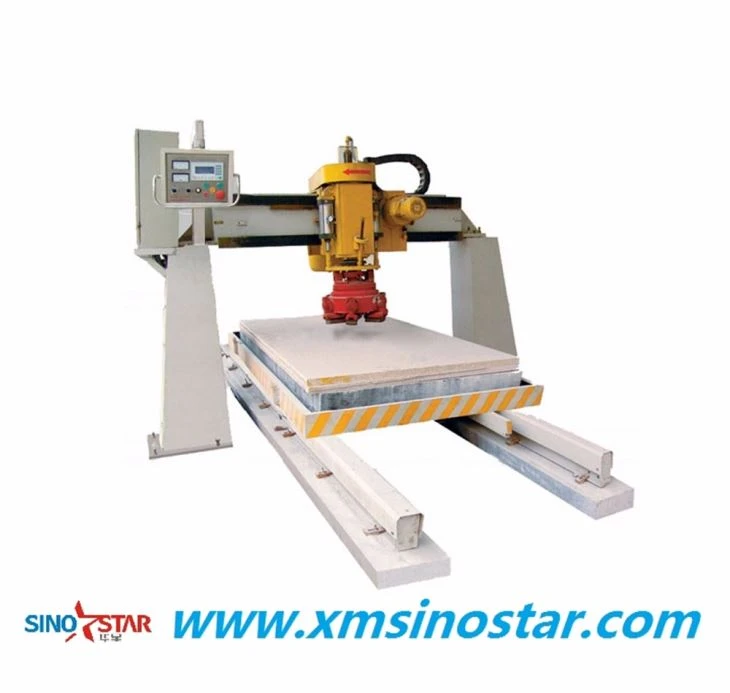
2. Bag Filters
Bag filters are another common dust collection method. They work by passing the dust - laden air through a series of fabric bags. The dust particles are trapped on the surface of the bags, while the clean air passes through. Over time, as the dust accumulates on the bags, a cleaning mechanism, such as reverse air flow or pulse jet cleaning, is used to dislodge the dust into a collection bin.
Bag filters are highly effective at capturing fine dust particles, which is crucial in slab polishing as fine stone dust can be a major health hazard. They can achieve high filtration efficiencies, often up to 99% or more. Additionally, bag filters can be customized to suit different airflow rates and dust characteristics.
On the downside, bag filters require regular maintenance. The bags need to be inspected and replaced periodically, especially if the dust is abrasive. Also, in some cases, the cleaning mechanism may not be fully effective, leading to reduced filtration efficiency. Our Automatic Stone Polishing Machine for Marble can be equipped with high - quality bag filters for optimal dust collection.
3. Cartridge Filters
Cartridge filters are similar to bag filters but use pleated filter cartridges instead of fabric bags. The pleated design provides a larger filtration area in a smaller space compared to bag filters. This makes cartridge filters more compact and suitable for applications where space is limited.
Like bag filters, cartridge filters are very effective at capturing fine dust. They also have a relatively low pressure drop, which means less energy is required to move the air through the filter. The cleaning of cartridge filters is usually done by pulse jet cleaning, which is quick and efficient.
However, cartridge filters can be more expensive to replace than bag filters. Also, if the dust is sticky or has a high moisture content, the cartridges may clog more easily. Our Stone Bridge Polishing Machine can be integrated with cartridge filter systems for efficient dust collection in confined spaces.
4. Wet Dust Collectors
Wet dust collectors use water to capture dust particles. The dust - laden air is passed through a water chamber or sprayed with water. The water droplets capture the dust particles, and the mixture of water and dust is then collected in a sump.
One of the main advantages of wet dust collectors is their ability to handle explosive or flammable dusts safely. Since the dust is captured in water, there is no risk of dust explosions. They are also effective at capturing fine dust and can be used in applications where dry dust collection methods may not be suitable.
However, wet dust collectors require a continuous supply of water and proper disposal of the wastewater. The water may also need to be treated to remove the dust particles before it can be discharged. Maintenance of wet dust collectors can be more complex due to the presence of water and the potential for corrosion.
5. Combination Systems
In many cases, a combination of different dust collection methods is used to achieve the best results. For example, a cyclone dust collector can be used as a pre - collector to remove the larger particles, followed by a bag filter or cartridge filter to capture the remaining fine dust. This approach can take advantage of the strengths of each method while minimizing their weaknesses.
Combination systems can be customized based on the specific requirements of the slab polishing process, such as the type of stone being polished, the airflow rate, and the level of dust generation. Our team of experts can help you design a customized combination dust collection system for your Slab Polishing Machine.
Considerations for Choosing a Dust Collection Method
When choosing a dust collection method for a slab polishing machine, several factors need to be considered:
Dust Characteristics
The size, shape, and chemical composition of the dust particles are important. Coarse dust can be more easily captured by cyclone dust collectors, while fine dust requires more efficient filtration methods such as bag filters or cartridge filters.
Airflow Rate
The volume of air that needs to be processed per unit of time affects the choice of dust collection equipment. High - airflow applications may require larger and more powerful dust collectors.
Space Constraints
The available space in the workshop can limit the type of dust collection system that can be installed. Compact systems like cartridge filters may be more suitable for small workshops.
Maintenance Requirements
Some dust collection methods, such as bag filters, require more frequent maintenance than others. Consider the availability of maintenance staff and the cost of replacement parts.
Cost
The initial cost of the dust collection system, as well as the operating and maintenance costs, should be taken into account. While more advanced systems may have a higher upfront cost, they may offer long - term savings in terms of energy consumption and reduced maintenance.
Conclusion
Effective dust collection is essential for a slab polishing machine. By choosing the right dust collection method or combination of methods, you can protect the health of your workers, improve the quality of your finished products, and extend the lifespan of your machinery.
As a supplier of Slab Polishing Machines, we have extensive experience in providing suitable dust collection solutions. If you are interested in learning more about our products or need help in choosing the right dust collection method for your specific needs, please feel free to contact us for a procurement negotiation. We are committed to providing you with the best equipment and support to ensure the success of your stone processing operations.
References
- Industrial Ventilation: A Manual of Recommended Practice, American Conference of Governmental Industrial Hygienists.
- Dust Collection Handbook, various industry experts.
Send Inquiry