Your Leading Xiamen Sino Star Machinery. Supplier


Xiamen Sino Star Machinery is a professional manufacturer of stone machines. We have been focus on stone machine industry for more than 15 years. Our product includes stone cutting machine, stone polishing machine, bridge saw machine, stone quarry machine, stone band saw cutting machine and many other stone machine.

 
Why Choose Us?
 
01/

High quality
We understand that stone processing demands robust and reliable machinery. Our equipment is engineered for longevity, ensuring that you get the most out of investment.

02/

Rich experience
We have been focus on stone machine industry for more than 15 years.

03/

Comprehensive range
We offer a comprehensive range of machines to suit every aspect of stone processing. Our extensive selection means you can find the perfect match for your specific needs.

04/

Professional team
We are not just selling machines, but on providing solutions. Our team of knowledgeable experts is always ready to assist with technical advice, and after-sales support.

  • Chain Saw Machine Quarry Cutting

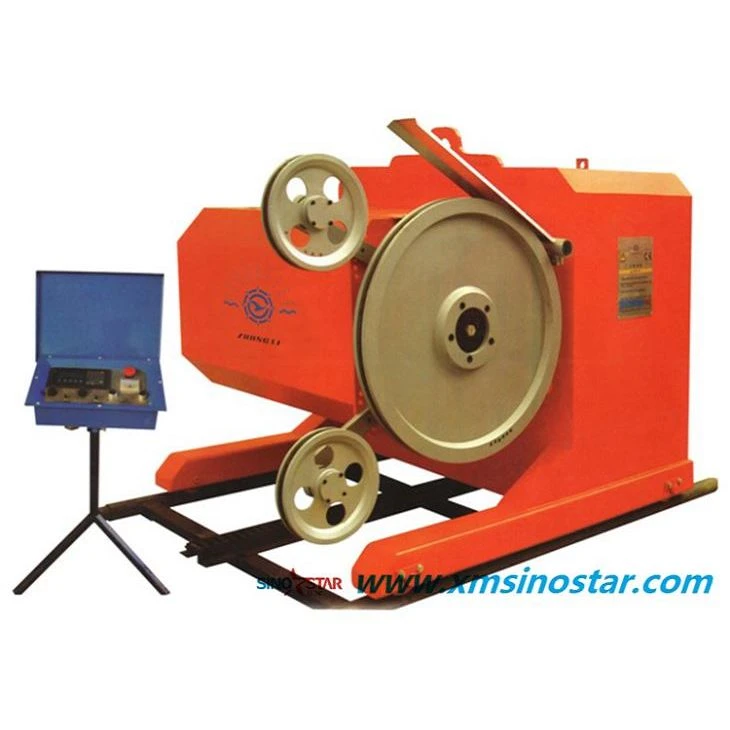
    Chain saw machine is a kind of equipment to cut marble quarry with chain saw unit.What you see here is rail way type saw machine,it is a basic design.

  • Marble Chain Saw Machine

    Marble chain saw machine is a equipment with long arm saw unit to mining marble quarry into blocks.It is a good machine to work with diamond wire saw cutting machine.

  • Chain Saw Mining Machine

    Chain saw mining machine one of the main quarry mining machine in the world.It works well with circular blades quarry cutting machine and diamond wire saw machine.

What is Chain Saw Machine?


A chainsaw (or chain saw) is a portable handheld power saw that cuts with a set of teeth attached to a rotating chain driven along a guide bar.

Modern chainsaws are typically gasoline-, electric-, or battery-powered and are used in activities such as tree felling, limbing, bucking, pruning, cutting firebreaks in wildland fire suppression, harvesting of firewood, for use in chainsaw art and chainsaw mills, for cutting concrete, and cutting ice. Precursors to modern chainsaws were first used in surgery, with patents for wood chainsaws beginning in the late 19th century.

Benefits of Chain Saw Machine
 

Efficiency: Chainsaws are powerful tools that can cut through wood quickly and efficiently. They are designed to handle tough cutting tasks that would be difficult or time-consuming to do by hand.


Versatility: Chainsaws can be used for a wide range of cutting tasks, including felling trees, pruning branches, cutting firewood, and shaping lumber. They come in various sizes and designs to suit different applications.


Portability: Chainsaws are portable tools that can be easily carried to different locations. This makes them ideal for outdoor work in remote areas or on uneven terrain where other cutting tools may not be practical.


Precision: With the right technique and skill, chainsaws can be used to make precise cuts in wood. This makes them valuable tools for tasks that require accuracy and control, such as shaping or sculpting wood.


Productivity: Using a chainsaw can significantly increase productivity compared to manual cutting methods. This is particularly important in commercial settings where time is of the essence.


Safety features: Modern chainsaws come with various safety features, such as chain brakes, kickback protection, and anti-vibration systems, to help reduce the risk of accidents and injuries during use.


Maintenance: While chainsaws require regular maintenance to keep them in good working condition, they are generally easy to maintain with the right tools and knowledge. Proper maintenance can help extend the life of the chainsaw and ensure optimal performance.


Cost-effective: Chainsaws are a cost-effective tool for cutting and processing wood, especially when compared to alternative methods or tools. They can help save time and effort, making them a valuable investment for professionals and homeowners alike.

Types of Chain Saw Machine
Chain Saw Mining Machine
Stone Wire Saw Cutting Machine For Quarry
Marble Granite Block Cutting Machine
Stone Profile Machine

Gas powered chainsaws
Gas-powered chainsaws are the most common choice for both amateur and professional users. A gas-powered chainsaw, as the name implies, is powered by gas. This chain saw has a two-stroke or two-cycle engine that combines oil and gas to allow it to be operated. The oil lubricates the interior parts of the engine and protects them from wear and injury, while the gas is needed for combustion. These chainsaws must be maintained regularly to function effectively.


Corded electric chain saws
Electric chain saws feature a plug-in power cord and run on electricity. They don't have engines since they don't use gasoline. Electric chain saws with cords are deemed stationary because they must be plugged in a while in use. Fortunately, you can make the most of this chain saw by using a portable generator. You may utilize the chain saw by plugging it in with a lengthy extension cord. On the other hand, a corded electric chainsaw cannot be used for certain jobs, such as tree felling in the woods.


Battery powered chainsaw machines
A battery-powered chain saw runs on batteries rather than gasoline or electricity, often known as a cordless chain saw. The batteries must be charged ahead of time. Although you won't need to get regular fueling or to service like you would with a gas-powered chain saw, or deal with plug limitations like you would with a corded electric chain saw, you will need to charge the batteries (so make sure you have a rechargeable battery) frequently to keep the chain saw running.


Manual chainsaws
There is no need for gas, power, or batteries with manual chain saws. They are not sold by chain saw providers, although they are frequently made from a saw chain and other readily available parts. This implies you'll need to get a saw chain and start cutting wood. Instead of relying on petrol, you must rely on your strength. Although this chain saw is frequently used to trim wood or firewood, most people do not acquire it. They don't make any noise, yet they use up a lot of your power.


Pole chainsaws
A pole saw is a saw with an extension pole attached to it. It's typically used to reach tree limbs to cut, remove, or trim them. Pole saws are not chain saws, though they are similar in several ways. These saws are available in three different types: gas, battery, and corded.


Components of Chain Saw Machine


Bar
The chainsaw bar is the most important part of the machine, and it is a metal bar which is also known as the guide bar. The chain will be at its place because of the bar, and it ensures a smooth and straight-cutting process. Chain bar length may vary from model to model.


Chain catcher
A chainsaw chain catcher is another important component of the tool which ensures the safety aspect of the chainsaw. It works as a guard design to seize the chain case and break during the working process. This component is important to secure you from any kind of serious injury if the chain breaks.


Chain brake
To handle the situation of sudden kickback, the role of the chain brake is very important to halt the saw from operating. Sometimes, the chain is squeezed and nicked and that’s why a chain break is required in this situation.


Engine
A chainsaw never starts and works for the cutting process without having an engine. Hence, the engine is the most important part of the chainsaw. The chainsaw may be electric or gasoline. Electric chainsaws also have engines, and these types of chainsaws are powered by electricity. On the other hand, gasoline or petrol chainsaws have engines.


Power button
The chainsaw power button is the major component of the machine, and you can see this part in the electric chainsaw. An electric power chainsaw can turn on and off with the use of a power button. You need to check the user manual on how to start a chainsaw.


Pull cord
Pull cord is important to turn the chainsaw and it has a small rope and plastic handle. Due to the easy-to-carry feature, it is comfortable to use. Not all chainsaws have this component but gas-powered chainsaws have this component.


Throttle interlock
To prevent a user from any accident when throttled, a throttle interlock is presented in the machine. You must press the throttle interlock before unlocking and turn-on the throttle. Throttle lock is available on the top of the rear handle.


Chain tensioner
A chainsaw tensioner is important to tight the guide bar chain and if it is tight properly then it is good for the higher efficiency of the chainsaw. The smooth and fine working process of a chainsaw chain depends on the chain tensioner.


Throttle
The speed of the chain depends on the throttle condition, and it controls the gas and gas-powered chainsaw combustion chamber. Adding more fuel means you can get more speed in the machine. On the other hand, an electric or battery-powered saw is also controlled by the throttle.


Handguard
The handguard works as a protector that keeps debris from hitting the operator’s hands while cutting. Also, it helps protect you from the chain’s top that spins.

We highly suggest never taking the hand guard off, and you shouldn’t use a chainsaw that doesn’t have it.


Anti-vibration system
The saw’s anti-vibration handle system makes it easier on the hands of the user to use the chainsaw. The chainsaw’s anti-vibration handle system absorbs vibrations from the chainsaw’s motor that would otherwise cause stress on your arms, hands, and joints.


Front and rear handle
The front handle goes around the engine’s front from underneath to the top of the motor. It’s designed to make it easy to hold and use the chainsaw.

On the other hand, on the back of the chainsaw is where the rear handle is. It’s where the throttle and safety lock for the throttle are. To use the chainsaw, you must put one hand on the handle in the back.


Process of Chain Saw Machine


Scan your work area.
Familiarize yourself with your work area. Be aware of your “escape routes”—places you can safely move to once the tree begins to fall. Your tree could fall in an unexpected direction, so it’s best to be prepared for any possible scenario. Chainsaws are called “widow-makers” for good reason—they can be hazardous to operate. Be sure to have a plan and understand the terrain you’re working on.


Prep yourself and your saw.
Don all of your gear, from head to toe. Check your saw to ensure that the chain has good tension. If you can tug the chain up from the guide bar and disengage the chain links from the guide or the “nose,” it’s too loose. You’ll need to tighten the tension to prevent injury. Check your machine’s maintenance guide for instructions on tightening the chain. Most of the time, you’ll use the “scrench” (screwdriver/wrench) that comes with the machine. A properly tightened chain should give slightly when pulled but should not become disengaged from the guide.


File the depth gauges.
If you have a gas machine, check the gas levels and fill the tank before you start. With a two-cycle engine, the gas and oil will likely require mixing in the tank. Buy two-stroke oil and add it to the tank at the manufacturer’s recommended ratio (usually a ratio of 50:1, or about 2.6 ounces of oil to a gallon of gas). Fill the chain lube reservoir with chain oil.


Engage the chain brake.
Set your chainsaw flat on the ground, with the bottom down. Push the chain brake forward until it locks. The chain brake, which is usually a separate lever located between the top handle on the chainsaw and the blade, prevents the chain from spinning until you release the brake and apply the throttle.


Choke and prime the saw.
If you’re using a gas-powered saw and it has a choke, turn it on. If there’s a primer button, push it four to six times to pull gas into the carburetor, then turn the power switch on. If your chainsaw is electric, all you need to do is depress the safety switch and flip the power switch on.


Secure the saw and pull the starter handle.
Those with electric chainsaws can move on to Step 7. For those with gas chainsaws, put your right foot through the back handle and put your weight down on the handle to secure the saw. Use your left hand to hold the front handle firmly in place. With your right hand, pull the starter rope out sharply to its full length. It will usually take four or five pulls to start the engine. If the engine is “firing” but not engaging, adjust the choke by pulling it out halfway.


Brace yourself to make a cut.
Even after the engine has started, the chain won’t be turning. You’ll need to press the trigger or throttle to get the chain moving. First, position yourself properly with feet planted firmly and a strong grip on the saw. Always cut with the saw off to the side or angled away from you to minimize injury in the event of kickback.


Make your cut.
When you’re ready to cut, release the chain brake and fully engage the throttle. Lay the saw where you want to cut. Don’t apply pressure—the momentum of the chain and blade will draw the wood in. Never, ever force it. If you’re using a corded electric saw, always make sure you’re aware of the cord, and don’t let it get in your way.


Finish your cut.
Maintain a strong, steady grip and keep the throttle fully engaged for the duration of the cut. Release the throttle only after you have cut through or removed the blade from the cut (if you’re making carved-in cuts for tree felling).


Turn off the saw.
To power off the saw, simply switch it to “off.” Let the saw cool down before storing it.


How to Maintain Chain Saw Machine


1.When adding gas, make sure you blend the oil and gasoline as directed in the owner’s manual. Make sure they’re combined correctly before adding them to the chainsaw or the oil will sink to the bottom of the gas can.


2.Make sure you keep your chain sharp. If a chain goes dull, it can contribute to accidents or at the least burn you out as you grind away on logs. Simply put, a sharp chain does the cutting for you. If it’s not sharp, you’ll end up doing most of the work yourself. If the chainsaw is shooting out chunks of wood about a fourth of an inch across, it’s sharp. If nothing but sawdust is coming out, it’s time to either sharpen the chain or change it.


3.It’s normally recommended to have one or two extra sharp chains when cutting so you can change the one on the saw if it gets dull or if you hit a rock. If you want to sharpen the chain, it’s a good idea to take it to a professional.


4.Always keep the chain clean, tight and oiled. Before each use, check to make sure the chain fits snug against the bar while remaining loose enough to be moved with a gloved hand. Also, check the chain oil and fill the reservoir if needed. Don’t allow sawdust or wood chips to clog up the chain and always double-check the chain oil.


5.If your chainsaw seems to be losing power, it’s time to clean the air filter or replace it. A fuel filter is also a component that should be cleaned on a regular basis.


6.Always make sure you are double-checking the nuts, bolts and screws to make sure they are tight for top maintenance. Check spark plugs and the carburetor and regularly clean and adjust them. Also, be sure to check and replace hoses and starter rope when needed.


7.Keep an eye on the chain when the chainsaw is idling. If it is moving, it’s time to turn down the idle speed because this could lead to an unsafe condition.


8.During times of the year when you aren’t using your chainsaw, store away properly and drain all the fuel from the tank and lines. Take the chain off, store in a safe container filled with oil. Drain the oil from the chainsaw. And clean the entire saw.


Who Invented the Chainsaw?


The earliest patent for an "endless chain saw" (US patent 780,476) was granted to Samuel J. Bens of San Francisco on January 17, 1905, and filed roughly 18 months earlier in July 1903. Here's one of the diagrams from that patent, showing (from the side and from above) a huge, static sawing machine slicing through a tree trunk. Bens was mainly concerned with how the saw worked and didn't specify the power source, except to note that it was "furnished with driving power, such as a steam-engine, gas-engine, or motor of any kind." About 16 years later, in 1921, he filed another patent (US patent number 1,617,565) for a portable chain saw that "aims to provide a simple, compact, durable, and efficient machine capable of being easily handled by a couple of operators to rapidly and expeditiously cut logs or trees irrespective of the position, and one which can be readily conveyed from place to place." 


Our Factory
 

We offer a full range of stone equipment from A to Z. Xiamen Sino Star Machinery has been accepted by more and more customers and in the future our stone tools will help more customers make great achievements. 


202404191125060d278
ba201902140947292064332


FAQ

Q: What is a chainsaw machine?

A: A chainsaw (or chain saw) is a portable handheld power saw that cuts with a set of teeth attached to a rotating chain driven along a guide bar. A chainsaw cutting a small wooden board.

Q: What is the difference between a saw and a chainsaw?

A: Table saws allow moderately precise cuts while chainsaws are rough cut tools. The cutting width of a table saw is generally around 1/8th of an inch but a chainsaw cut is much wider at 1/4 to a 1/2 inch. Chainsaws mostly run on liquid fuels while table saws usually run on DC power, relying on cords to supply it.

Q: Is a chainsaw a tool or machine?

A: A chainsaw is an incredibly effective and efficient tool for various tasks such as tree felling, pruning hedges, and harvesting firewood. As a portable machine, it allows users to navigate between different applications easily.

Q: How fast does a chainsaw spin?

A: The motor on a chainsaw turns at around 12 to 14 thousand RPM. At these speeds, with an unequally heated combustion chamber.

Q: What is better than a chain saw?

A: Additionally, handsaws can be preferable for removing hard-to-reach branches. It's much easier to maneuver a handsaw with one arm to get to these branches, especially when you need to reach to make the cut. In that same vein, handsaws are more ideal for cuts you're making above shoulder height.

Q: What PPE is required for chainsaw use?

A: Eye/Face Protection such as safety glasses. Appropriate protective footwear per OSHA standards. Leg protection such as work pants or chaps. Work gloves.

Q: What are the three types of chainsaws?

A: Types of Chainsaws
There are corded electric chainsaws, gas chainsaws and cordless chainsaws. Each type of chainsaw has its own advantages.

Q: What size chainsaw for a beginner?

A: Typically a chainsaw with a shorter bar around 14” and smaller is enough for property maintenance, trimming, pruning, and cutting down broken tree limbs. On the other hand, cutting down small trees, thick branches, and cleaning up storm damage will need a longer bar around 16”-20” to make the job easier and safer.

Q: What is the difference between a chainsaw and trimmer?

A: A hedge trimmer is designed for trimming and shaping hedges, shrubs, and other plants with woody stem up to about 5/8 of an inch thick. A chainsaw, on the other hand, is much more powerful and can cut through much thicker material, making it better suited for felling trees or cutting firewood.

Q: Why does my chainsaw chain dull so quickly?

A: Contact with the ground
Hard surfaces such as concrete can cause your chainsaw blades to grind down, affecting performance. Any abrasive sediments on the ground, such as sand or dirt, can also dull your chainsaw by filing down the sharp cutting blades.

Q: How many times can a chainsaw chain be sharpened?

A: While there is no exact number, we can say that each chain can be sharpened at least 2-3 times. At the same time, we've heard some chains can be sharpened up to 10 times! After that, the chain will be too fine to sharpen any more.

Q: Do you wear gloves when using a chainsaw?

A: Gloves are not required, but it is a good idea to use gloves whenever handling a chainsaw. Gloves can dampen the vibration from the saw and protect from minor cuts.

Q: Which is better, an electric or gas chainsaw?

A: When it comes to heavy-duty performance, electric chainsaws don't hold a candle to gas ones. The latter is specifically designed to facilitate lumberjacks undertaking large-scale projects. Needless to say, the more work, the better it is to use a gas chainsaw.

Q: What not to cut with a chainsaw?

A: Do not attempt to cut anything other than wood with a chainsaw. Cut only one piece of wood at a time, never two branches at once. Do not operate a chainsaw if you are fatigued because concentration and a secure grip won't be optimal. Make sure the chain brake is functioning.

Q: What are the different types of chainsaw chains?

A: There are four main chainsaw blade / cutter styles, these are; square chisel, full chisel, semi-chisel and low profile.

Q: What are the classification of chainsaws?

A: If we speak of chainsaws in terms of power source, there are 3 basic groups: petrol-engine chainsaws, electric chainsaws, and battery-powered chainsaws. - medium power chainsaws.

Q: What type of chainsaw chain cuts the best?

A: But which chain cuts fastest and which should you choose? The fastest cutting chainsaw chain is either a full chisel or a chisel skip chain. The full chisel offers the fastest and most aggressive cutting action for chainsaw bars that are 24” or less. For bars that are longer than 24”, choose a chisel skip chain.

Q: How do I choose a chainsaw?

A: For light and occasional use for limbing, cutting small logs and felling small trees, experts recommend a lightweight chain saw with a bar measuring 14 inches or less. For frequent log cutting and felling of small to medium trees, a midsize chain saw with a bar 14 to 20 inches long is best.

Q: Do chainsaws need to be serviced?

A: Your chainsaw needs regular maintenance. You should check it before and after every use, and take care of longer term maintenance at the recommended intervals. You will find a detailed overview of all necessary maintenance measures and intervals in the operating instructions.

Q: What is the preventive maintenance of a chainsaw?

A: Preventative Maintenance: How to Clean a Chainsaw
Ideally, before you put your chainsaw away after each use, you should clear debris from the bar, chain, and surfaces of the saw body. Don't forget to take a look at the cooling fins and air intake, as well, and remove any material that's stuck in the slots.

We're professional chain saw machine manufacturers in China, specialized in providing high quality bridge saw machine. We warmly welcome you to wholesale bulk chain saw machine for sale here from our factory.

mining ripper for stone, excavator parts for stone quarry, processing parts for stone quarry

Send Inquiry