

What is the noise level of Stone Bridge Saw during operation?
Jun 04, 2025
Leave a message
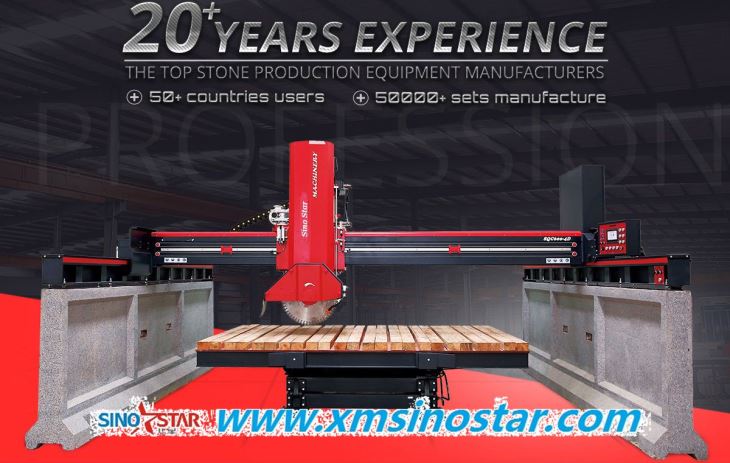
When it comes to the operation of stone bridge saws, one crucial aspect that often concerns users is the noise level. As a dedicated supplier of stone bridge saws, I understand the importance of this factor and its impact on the working environment, operator comfort, and overall productivity. In this blog, I will delve into the noise level of stone bridge saws during operation, exploring the factors that influence it, the standards and regulations in place, and how our products at [our company] address these concerns.
Factors Influencing the Noise Level of Stone Bridge Saws
The noise level generated by a stone bridge saw during operation is influenced by several factors, each of which plays a significant role in determining the overall acoustic environment. Understanding these factors is essential for both operators and suppliers to manage noise levels effectively.
1. Cutting Mechanism
The cutting mechanism of a stone bridge saw is the primary source of noise. The interaction between the saw blade and the stone material creates vibrations and friction, which are converted into sound waves. The type of saw blade, its speed, and the pressure applied during cutting all affect the noise level. For instance, a diamond saw blade cutting through hard granite at high speed will generate more noise than a softer blade cutting through marble at a lower speed.
2. Machine Design and Construction
The design and construction of the stone bridge saw also play a crucial role in noise generation. A well-designed machine with proper vibration damping and noise insulation features can significantly reduce the noise level. On the other hand, a poorly constructed machine with loose components or inadequate soundproofing will produce more noise. For example, a machine with a solid frame and a well-sealed motor housing will be quieter than one with a flimsy frame and an exposed motor.
3. Operating Conditions
The operating conditions, such as the type of stone being cut, the cutting depth, and the feed rate, can also affect the noise level. Cutting hard and dense stones requires more power and generates more noise than cutting softer stones. Similarly, deeper cuts and higher feed rates will result in increased noise levels. Additionally, the presence of dust and debris in the cutting area can also contribute to noise generation by causing additional friction and vibration.
Standards and Regulations for Noise Levels in the Workplace
To protect the health and safety of workers, many countries have established standards and regulations for noise levels in the workplace. These standards specify the maximum allowable noise levels and the measures that employers must take to control noise exposure. For example, in the United States, the Occupational Safety and Health Administration (OSHA) has set a permissible exposure limit (PEL) of 90 decibels (dB) for an 8-hour workday. Employers are required to provide hearing protection to workers exposed to noise levels above this limit and to implement engineering controls to reduce noise levels.

In the European Union, the Noise at Work Directive sets out similar requirements for noise exposure limits and noise control measures. The directive requires employers to assess the noise levels in the workplace, provide hearing protection to workers, and take steps to reduce noise levels to below 85 dB(A) for an 8-hour workday.
Noise Reduction Measures in Stone Bridge Saws
As a supplier of stone bridge saws, we are committed to providing our customers with high-quality machines that meet or exceed the relevant noise standards and regulations. To achieve this, we incorporate several noise reduction measures into our product design and manufacturing process.
1. Advanced Cutting Technology
We use advanced cutting technology to optimize the cutting process and reduce noise generation. Our saw blades are designed to cut through stone materials with minimal vibration and friction, resulting in lower noise levels. Additionally, we use variable speed drives to adjust the cutting speed according to the type of stone being cut, further reducing noise and improving cutting efficiency.
2. Vibration Damping and Noise Insulation
We incorporate vibration damping and noise insulation materials into the design of our stone bridge saws to reduce noise transmission. Our machines are equipped with rubber mounts and shock absorbers to isolate the cutting head from the frame, reducing vibration and noise. Additionally, we use soundproofing materials to line the motor housing and other noise-generating components, further reducing noise levels.
3. Dust Collection Systems
We also provide dust collection systems with our stone bridge saws to remove dust and debris from the cutting area. This not only improves the working environment but also reduces noise generation by eliminating the additional friction and vibration caused by dust and debris. Our dust collection systems are designed to be highly efficient, capturing up to 99% of the dust generated during cutting.
Our Product Range and Noise Levels
At [our company], we offer a wide range of stone bridge saws to meet the diverse needs of our customers. Our product range includes Granite Bridge Saw, PLC Bridge Saw Edge Cutting Machine, and Bridge Saw 360 Rotation Table. Each of our machines is designed to operate at a low noise level, ensuring a comfortable and productive working environment.
Our granite bridge saws are specifically designed for cutting hard granite materials. They are equipped with powerful motors and high-quality saw blades to ensure efficient and precise cutting. Despite their power, our granite bridge saws operate at a relatively low noise level, thanks to our advanced cutting technology and noise reduction measures.
Our PLC bridge saw edge cutting machines are ideal for cutting and edging stone materials. They feature a programmable logic controller (PLC) that allows for precise control of the cutting process, resulting in high-quality cuts and reduced noise levels. Additionally, our PLC bridge saw edge cutting machines are equipped with vibration damping and noise insulation materials to further reduce noise transmission.
Our bridge saw 360 rotation tables are designed to provide maximum flexibility and efficiency in stone cutting. They allow for 360-degree rotation of the cutting head, enabling operators to cut stones from any angle. Despite their advanced features, our bridge saw 360 rotation tables operate at a low noise level, making them suitable for use in a variety of working environments.
Contact Us for More Information
If you are interested in learning more about our stone bridge saws and their noise levels, please do not hesitate to contact us. Our team of experts is always ready to assist you with your inquiries and provide you with the information you need to make an informed decision. Whether you are a small stone fabrication shop or a large-scale construction company, we have the right stone bridge saw for your needs.
References
- Occupational Safety and Health Administration (OSHA). (n.d.). Noise. Retrieved from [OSHA website]
- European Union. (2003). Directive 2003/10/EC of the European Parliament and of the Council of 6 February 2003 on the minimum health and safety requirements regarding the exposure of workers to the risks arising from physical agents (noise). Official Journal of the European Union, L 42, 38-44.
Send Inquiry