

What is the noise level of a saw for stone cutting?
Jul 29, 2025
Leave a message
Hey there! As a supplier of Saw for Stone Cutting, I often get asked about the noise level of our stone-cutting saws. It's a valid concern, especially when you're working in a busy workshop or on a construction site. In this blog post, I'll delve into what affects the noise level of a saw for stone cutting and how you can manage it.
First off, let's understand why stone-cutting saws make noise. When a saw blade cuts through stone, it's essentially grinding and chipping away at the hard material. This process creates vibrations that translate into sound waves. The type of stone, the blade's design, and the power of the saw motor all play a role in how much noise is generated.
Factors Affecting Noise Levels
Type of Stone
Different stones have different hardness and density levels. Harder stones like granite require more force to cut through, which generally means the saw has to work harder and make more noise. Softer stones like limestone, on the other hand, are easier to cut and tend to produce less noise. For example, cutting a slab of granite might result in a much louder operation compared to cutting a piece of limestone.
Blade Design
The design of the saw blade also matters a great deal. Blades with a larger number of teeth can cut more smoothly, which can reduce noise. However, if the teeth are too small or too closely spaced, they might get clogged with stone dust, causing the blade to vibrate more and generate more noise. Additionally, the quality of the blade material affects its performance. A high - quality blade made from durable materials will cut more efficiently and quietly than a cheap, low - quality one.
Motor Power
The power of the saw motor is another key factor. A more powerful motor can cut through stone faster, but it also tends to generate more noise. When the motor is working at high capacity, it creates more vibrations, which are then transferred to the blade and the surrounding air as sound. So, while a high - powered saw might be great for large - scale projects, it might not be the quietest option.

Measuring Noise Levels
Noise levels are measured in decibels (dB). The average noise level of a stone - cutting saw can range from around 80 dB to 110 dB or even higher, depending on the factors mentioned above. To put this into perspective, normal conversation is around 60 dB, and a lawnmower typically operates at about 90 dB. A noise level above 85 dB can be harmful to your hearing if you're exposed to it for an extended period.
Managing Noise Levels
Using Noise - Reducing Equipment
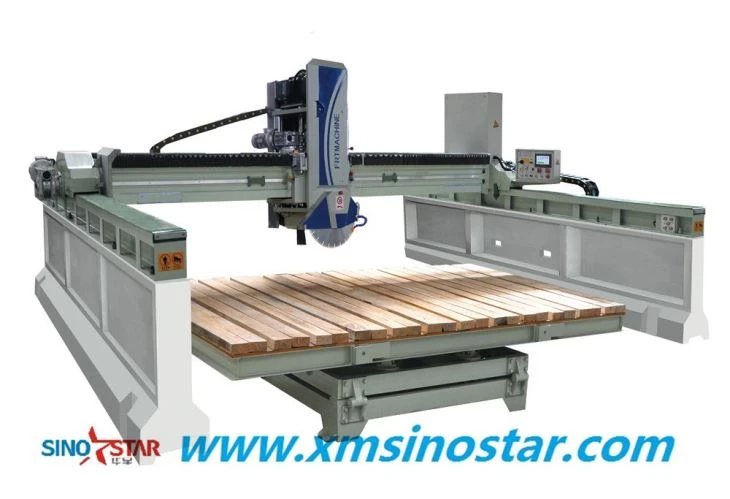
There are several ways to reduce the noise generated by a stone - cutting saw. One option is to use a saw with noise - reducing features. For example, some of our All in One Bridge Saw Machine models come with special insulation and vibration - dampening materials that help reduce the noise output. These machines are designed to be more user - friendly in terms of noise levels, making them a great choice for workshops where noise is a concern.
Wearing Hearing Protection
Even if you're using a saw with noise - reducing features, it's still a good idea to wear hearing protection. Earplugs or earmuffs can significantly reduce the amount of noise that reaches your ears. This is especially important if you're going to be using the saw for long periods or in a confined space where the noise can bounce around and become even louder.
Proper Maintenance
Regular maintenance of your saw is crucial for keeping the noise level down. Make sure the blade is sharp and clean. A dull blade will require more force to cut through the stone, which can increase the noise. Also, check the motor and other moving parts for any signs of wear or damage. Loose or damaged parts can cause extra vibrations and noise.
Our Product Range and Noise Levels
At our company, we offer a wide range of Saw for Stone Cutting products, each with different noise levels. Our Bridge Saw 360 Rotation Table is designed to provide a balance between power and noise reduction. It uses advanced technology to minimize vibrations and cut through stone efficiently, resulting in a relatively lower noise level compared to some other models on the market.
We understand that noise can be a major concern for our customers, whether they're running a small workshop or a large construction site. That's why we've put a lot of effort into developing saws that are not only powerful and efficient but also as quiet as possible.
Conclusion
In conclusion, the noise level of a saw for stone cutting is affected by several factors, including the type of stone, blade design, and motor power. By understanding these factors and taking steps to manage noise, such as using noise - reducing equipment, wearing hearing protection, and proper maintenance, you can make your stone - cutting operations more comfortable and less harmful to your hearing.
If you're in the market for a high - quality saw for stone cutting that offers a good balance between performance and noise reduction, we'd love to hear from you. Whether you're a professional stonemason or a DIY enthusiast, our range of products can meet your needs. Contact us to discuss your requirements and let's start a conversation about how we can help you with your stone - cutting projects.
References
- "Handbook of Stone Cutting and Polishing Technology"
- "Noise Control in Industrial Environments"
Send Inquiry