

Can a reciprocating saw be used for stone cutting?
Oct 28, 2025
Leave a message
When it comes to stone cutting, professionals and DIY enthusiasts alike often find themselves at a crossroads, trying to determine the most suitable tool for the job. One question that frequently arises is whether a reciprocating saw can be used for stone cutting. As a reputable supplier of saws specifically designed for stone cutting, I'm here to delve into this topic and provide you with a comprehensive answer.

Understanding the Reciprocating Saw
A reciprocating saw, also known as a sabre saw, is a versatile power tool that operates by moving the blade back and forth in a rapid, linear motion. It is commonly used for a variety of tasks, including cutting through wood, metal, plastic, and even drywall. The saw's design allows for quick and efficient cutting, making it a popular choice for demolition work and general construction projects.
The key components of a reciprocating saw include a motor, a handle, and a blade. The motor powers the blade, which is attached to the saw's chuck. The blade's teeth are designed to cut through different materials, and there are various types of blades available, each suited for specific applications.
The Challenges of Cutting Stone with a Reciprocating Saw
While a reciprocating saw is a powerful and versatile tool, using it for stone cutting presents several challenges. Stone is a hard and brittle material, and cutting through it requires a tool that can generate enough force to break the stone's structure without causing excessive damage or shattering.
One of the main issues with using a reciprocating saw for stone cutting is the blade. Standard reciprocating saw blades are typically designed for softer materials such as wood and metal. These blades have teeth that are not optimized for cutting through stone, and they can quickly become dull or damaged when used on hard surfaces.
Another challenge is the saw's design. Reciprocating saws are designed for rapid, linear motion, which can make it difficult to control the cut when working with stone. The saw's vibration can also cause the stone to crack or chip, especially if the blade is not properly aligned or if the cutting pressure is too high.
Specialized Blades for Stone Cutting
To overcome the challenges of cutting stone with a reciprocating saw, specialized blades are required. These blades are designed with diamond or carbide tips, which are much harder than standard steel blades and can withstand the high forces involved in cutting through stone.
Diamond blades are the most common type of blade used for stone cutting. They are made by embedding small diamond particles in a metal matrix, which provides the blade with the necessary hardness and cutting ability. Diamond blades are available in various shapes and sizes, each designed for specific applications, such as cutting granite, marble, or ceramic tiles.
Carbide-tipped blades are another option for stone cutting. These blades are made by attaching carbide tips to a steel blade body. Carbide is a hard and wear-resistant material that can provide good cutting performance on stone, although it is not as durable as diamond.
Using a Reciprocating Saw for Stone Cutting: Tips and Precautions
If you decide to use a reciprocating saw for stone cutting, there are several tips and precautions you should follow to ensure a successful and safe cutting process.
- Choose the Right Blade: As mentioned earlier, using a specialized blade is essential for cutting stone with a reciprocating saw. Make sure to select a blade that is designed for the type of stone you are cutting and that is compatible with your saw.
- Prepare the Stone: Before cutting, it is important to prepare the stone surface. This may involve cleaning the stone to remove any dirt or debris, marking the cutting line, and securing the stone in place to prevent it from moving during the cutting process.
- Control the Cutting Speed and Pressure: When cutting stone with a reciprocating saw, it is important to control the cutting speed and pressure. Too much speed or pressure can cause the blade to overheat or the stone to crack, while too little speed or pressure can result in a slow and inefficient cut.
- Use a Guide: To ensure a straight and accurate cut, it is recommended to use a guide or a template. This can help you keep the saw blade on the cutting line and prevent the stone from shifting or moving during the cutting process.
- Wear Protective Gear: Cutting stone can generate a lot of dust and debris, so it is important to wear appropriate protective gear, such as safety glasses, a dust mask, and gloves. This can help protect you from injury and reduce the risk of respiratory problems.
Alternative Tools for Stone Cutting
While it is possible to cut stone with a reciprocating saw using specialized blades, there are other tools that are better suited for this task. These tools are designed specifically for stone cutting and offer several advantages over a reciprocating saw.
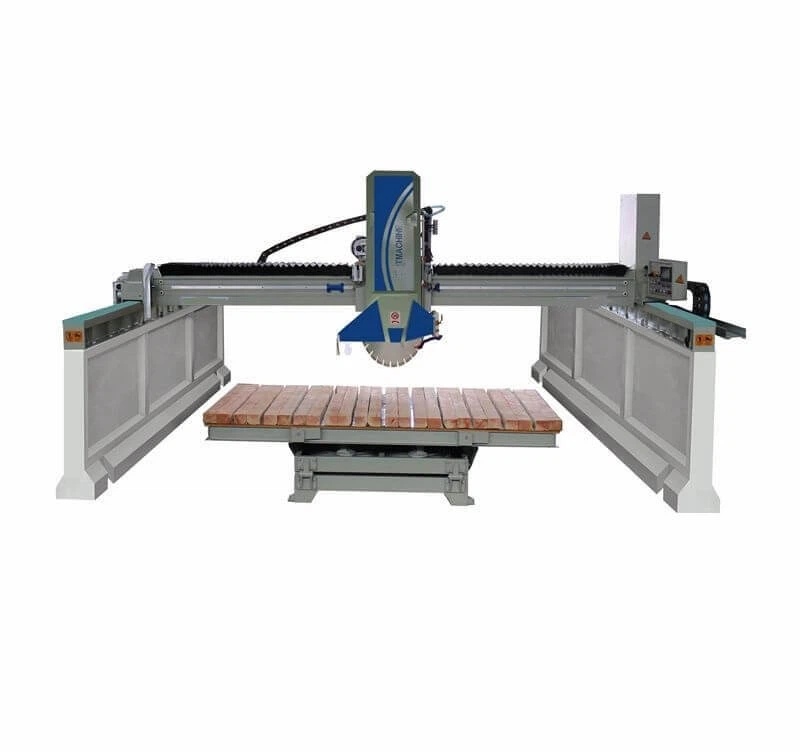
One of the most popular tools for stone cutting is the Stone Bridge Saw. This type of saw is designed for large-scale stone cutting projects and is commonly used in stone fabrication shops and construction sites. Stone bridge saws are equipped with a large diamond blade that can cut through thick slabs of stone with precision and ease.
Another option is the Granite Saw for Stone Cutting. These saws are specifically designed for cutting granite, which is one of the hardest and most durable types of stone. Granite saws are typically more powerful than standard saws and are equipped with specialized blades that can cut through granite quickly and efficiently.
For smaller stone cutting projects, such as cutting tiles or countertops, a Bridge Saw Stone Tile Cutter may be a more suitable option. These saws are designed for precision cutting and can be used to cut a variety of stone materials, including marble, granite, and ceramic tiles.
Conclusion
In conclusion, while it is possible to use a reciprocating saw for stone cutting, it is not the most ideal tool for the job. Stone cutting requires a tool that can generate enough force to break the stone's structure without causing excessive damage or shattering, and a reciprocating saw may not be able to provide the necessary power and control.
If you are planning to cut stone on a regular basis, it is recommended to invest in a specialized stone cutting tool, such as a stone bridge saw, a granite saw, or a bridge saw stone tile cutter. These tools are designed specifically for stone cutting and offer several advantages over a reciprocating saw, including better precision, faster cutting speeds, and longer blade life.
As a supplier of saws for stone cutting, we offer a wide range of high-quality tools and blades to meet your needs. Whether you are a professional stone fabricator or a DIY enthusiast, we can provide you with the products and support you need to get the job done right. If you have any questions or would like to discuss your stone cutting requirements, please don't hesitate to contact us. We look forward to working with you.
References
- "Handbook of Stone Masonry" by David C. Johnson
- "Stone Cutting and Finishing" by John A. Hurd
- "Power Tools for Stoneworking" by Michael D. Smith
Send Inquiry