

What kind of abrasive tools are used in a slab polishing machine?
Sep 19, 2025
Leave a message
Hey there! As a supplier of slab polishing machines, I often get asked about the kind of abrasive tools used in these machines. So, I thought I'd share some insights with you all.
First off, let's understand what slab polishing machines are all about. These machines are designed to give a smooth and shiny finish to stone slabs, which are used in various applications like countertops, flooring, and wall cladding. The quality of the finish largely depends on the abrasive tools used in the process.
One of the most commonly used abrasive tools in slab polishing machines is the diamond abrasive. Diamond is the hardest known material, making it ideal for cutting and polishing hard materials like stone. Diamond abrasives come in different forms, such as diamond pads and diamond segments.
Diamond pads are flexible discs that are attached to the polishing head of the machine. They are available in various grit sizes, ranging from coarse to fine. Coarse grit diamond pads are used for the initial rough grinding and shaping of the slab surface, while fine grit pads are used for the final polishing to achieve a mirror-like finish. For example, when you're working on a rough-cut marble slab, you'd start with a 50 or 100 grit diamond pad to remove any unevenness and then gradually move up to 200, 400, 800, 1500, and finally 3000 grit pads for a high - gloss finish.
Diamond segments, on the other hand, are more rigid and are usually used in saw blades and grinding wheels. They are particularly useful for cutting through thick stone slabs and for heavy - duty grinding operations. In a slab polishing machine, diamond segments can be used in the early stages of the process to quickly remove large amounts of material from the slab surface.
Another type of abrasive tool that is sometimes used in slab polishing machines is silicon carbide. Silicon carbide abrasives are less expensive than diamond abrasives and are suitable for softer stones like limestone and sandstone. They are available in the form of sandpaper and grinding wheels. Silicon carbide sandpaper can be used for hand - sanding or in some smaller - scale polishing machines. It can provide a good finish on softer stones without causing excessive scratching.
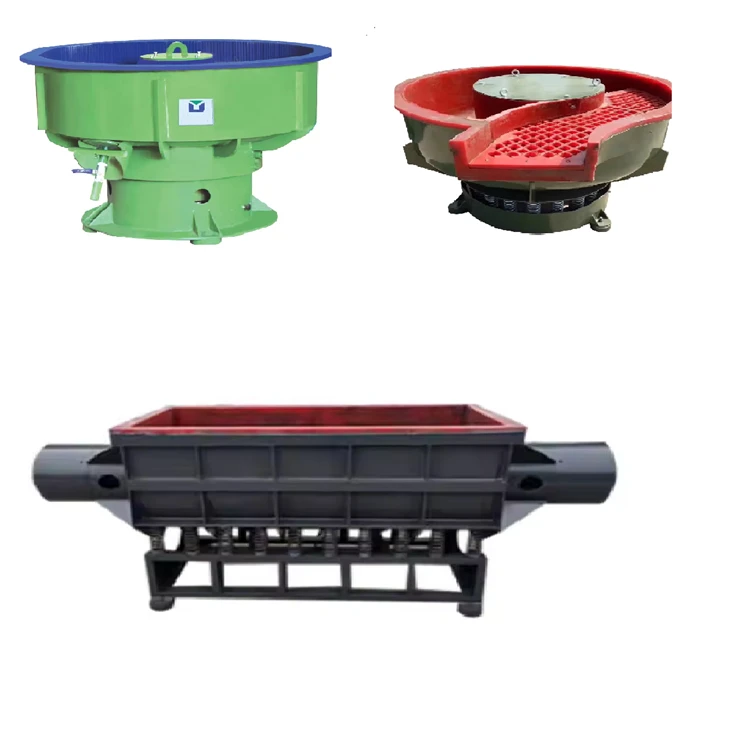

Ceramic abrasives are also an option. Ceramic abrasives are known for their high cutting efficiency and long lifespan. They can be used in combination with diamond abrasives or on their own for certain types of stone. Ceramic abrasives are particularly effective on granite slabs. They can quickly remove material and leave a smooth surface that can be further polished.
Now, depending on the type of slab polishing machine you have, the way these abrasive tools are used may vary. For instance, in a Tumbling Machine For Stone Polish, the abrasive tools are often used in a more gentle, tumbling motion. This machine is great for small - to medium - sized stone pieces. The tumbling action ensures that the abrasive tools evenly wear down the surface of the stone, giving it a uniform finish.
The Stone Quartz Polishing Machine is specifically designed for quartz slabs. Quartz is a very hard and dense material, so diamond abrasives are usually the go - to choice for this machine. The machine is equipped with multiple polishing heads that can use different grit diamond pads to achieve a high - quality finish on quartz slabs.
If you're dealing with large stone bridges or large - scale stone structures, the Stone Bridge Polishing Machine comes in handy. This machine is designed to handle heavy - duty polishing tasks. It can use both diamond segments and diamond pads to shape and polish the large stone surfaces.
When it comes to choosing the right abrasive tools for your slab polishing machine, there are a few factors to consider. Firstly, the type of stone you're working with is crucial. As I mentioned earlier, harder stones like granite and quartz require diamond abrasives, while softer stones can be polished with silicon carbide or other less - aggressive abrasives.
Secondly, the desired finish also plays a role. If you're aiming for a high - gloss mirror finish, you'll need to use a series of fine - grit diamond pads. But if a more matte finish is what you want, you may not need to use the ultra - fine grit pads.
The cost is also a consideration. Diamond abrasives are more expensive, but they offer better performance and longer lifespan, especially when working on hard stones. Silicon carbide and ceramic abrasives are more budget - friendly, but they may not be as effective on very hard materials.
In conclusion, choosing the right abrasive tools for your slab polishing machine is essential for achieving the best results. Whether you're working on small stone pieces or large - scale structures, there's an abrasive tool out there that can meet your needs.
If you're in the market for a slab polishing machine or have any questions about the abrasive tools we use, don't hesitate to reach out. We're here to help you make the right choice for your stone - polishing projects. Contact us for more information and let's start a great business relationship!
References
- "Handbook of Stone Processing Technology"
- "Abrasive Technology for Stone Polishing"
Send Inquiry