

What is the material of the body of Stone Bridge Saw?
Aug 01, 2025
Leave a message
What is the material of the body of Stone Bridge Saw?
As a supplier of Stone Bridge Saws, I often get asked about the materials used in the construction of these machines. The body of a Stone Bridge Saw is a critical component that significantly impacts its performance, durability, and overall functionality. In this blog post, I'll delve into the common materials used for the body of Stone Bridge Saws, their characteristics, and how they contribute to the machine's operation.
Cast Iron
One of the most traditional and widely used materials for the body of Stone Bridge Saws is cast iron. Cast iron is a group of iron - carbon alloys with a carbon content greater than 2%. It has several properties that make it an excellent choice for this application.
Firstly, cast iron has high stiffness. Stiffness is crucial in a Stone Bridge Saw because it helps to maintain the accuracy of the cutting process. When the saw blade is cutting through hard stone materials such as granite or marble, it generates significant forces. A stiff body made of cast iron can resist deformation under these forces, ensuring that the cutting path remains straight and precise.
Secondly, cast iron has good damping capacity. Damping refers to the ability of a material to absorb and dissipate vibration. During the cutting process, the saw blade and the stone interaction can generate a lot of vibrations. These vibrations, if not properly damped, can lead to poor cutting quality, premature wear of the saw blade, and even damage to the machine. The high damping capacity of cast iron helps to reduce these vibrations, resulting in a smoother cutting operation and a longer lifespan for the saw blade and other components.
However, cast iron also has some drawbacks. It is relatively heavy, which can make the machine more difficult to move and install. Additionally, it is more prone to corrosion compared to some other materials, so proper maintenance and protective coatings are required to prevent rusting.
Steel
Steel is another popular material for the body of Stone Bridge Saws. There are different types of steel used, such as carbon steel and stainless steel.
Carbon steel is known for its high strength. It can withstand the large cutting forces exerted during the stone - cutting process. The strength of carbon steel allows the machine to be designed with a more compact body while still maintaining its structural integrity. This can be beneficial in terms of space utilization, especially in smaller workshops.
Stainless steel, on the other hand, offers excellent corrosion resistance. This is particularly important in environments where the machine may be exposed to moisture or chemicals. For example, in some stone - processing factories, water is often used as a coolant during the cutting process. Stainless steel can resist the corrosion caused by the water and any additives in it, ensuring a longer service life for the machine.
Steel also has good machinability, which means it can be easily shaped and fabricated into the complex geometries required for the body of a Stone Bridge Saw. This allows for more precise manufacturing and customization of the machine according to different customer requirements.
Aluminum Alloys
In recent years, aluminum alloys have gained popularity in the construction of Stone Bridge Saw bodies. Aluminum alloys are lightweight compared to cast iron and steel. This makes the machine easier to handle, transport, and install. For businesses that need to move their equipment frequently or have limited lifting capabilities, the lightweight nature of aluminum - alloy bodies is a significant advantage.
Aluminum alloys also have good thermal conductivity. During the cutting process, a significant amount of heat is generated, especially when cutting hard stones at high speeds. The good thermal conductivity of aluminum alloys helps to dissipate this heat quickly, preventing overheating of the machine components. Overheating can cause damage to the bearings, motors, and other parts, and can also affect the cutting performance.
However, aluminum alloys are generally not as stiff as cast iron or as strong as steel. To compensate for this, the design of the machine body may need to be optimized, such as using thicker sections or adding reinforcement structures.
Composite Materials
Some advanced Stone Bridge Saws are now using composite materials for their bodies. Composite materials are made by combining two or more different materials to achieve specific properties.
For example, a composite body may consist of a fiber - reinforced polymer matrix. The fibers, such as carbon fibers or glass fibers, provide high strength and stiffness, while the polymer matrix helps to hold the fibers together and provides some damping characteristics.
Composite materials offer several advantages. They can be tailored to have specific mechanical properties according to the requirements of the Stone Bridge Saw. They are also lightweight like aluminum alloys, which can improve the machine's mobility. Moreover, composite materials can be more resistant to corrosion and chemical attack compared to metals.
However, composite materials are relatively expensive to produce, and the manufacturing process is more complex. This can increase the overall cost of the Stone Bridge Saw.
Impact on Machine Performance and Cost
The choice of material for the body of a Stone Bridge Saw has a direct impact on the machine's performance and cost.
A machine with a cast - iron body may offer high precision and good vibration damping, but it will be heavier and may require more maintenance. This type of machine is often suitable for high - precision stone - cutting applications where accuracy is of utmost importance, such as in the production of high - end stone countertops or architectural stone elements. However, the cost of manufacturing and transporting a cast - iron body machine may be relatively high.
A steel - body machine provides a good balance between strength, cost, and weight. It is a versatile option that can be used in a wide range of stone - cutting applications, from small - scale workshops to large - scale industrial production.
An aluminum - alloy body machine is lightweight and offers good heat dissipation, making it a good choice for applications where mobility and heat management are important. It is also generally more cost - effective in terms of transportation and installation. However, its lower stiffness may limit its use in some high - precision cutting applications.
Composite - body machines, although offering excellent performance in terms of strength - to - weight ratio and corrosion resistance, are more expensive due to the high cost of materials and the complex manufacturing process. They are often used in high - end, specialized Stone Bridge Saws where performance and durability are critical.
Conclusion
In conclusion, the material of the body of a Stone Bridge Saw plays a crucial role in its performance, durability, and cost. Cast iron, steel, aluminum alloys, and composite materials each have their own unique properties and advantages. As a supplier, we carefully consider these factors when designing and manufacturing our Stone Bridge Saws to meet the diverse needs of our customers.
If you are in the market for a Stone Bridge Saw or want to learn more about our products, we encourage you to reach out to us for a detailed discussion. We can provide you with more information on the different models and materials available, and help you choose the most suitable machine for your specific stone - cutting requirements.
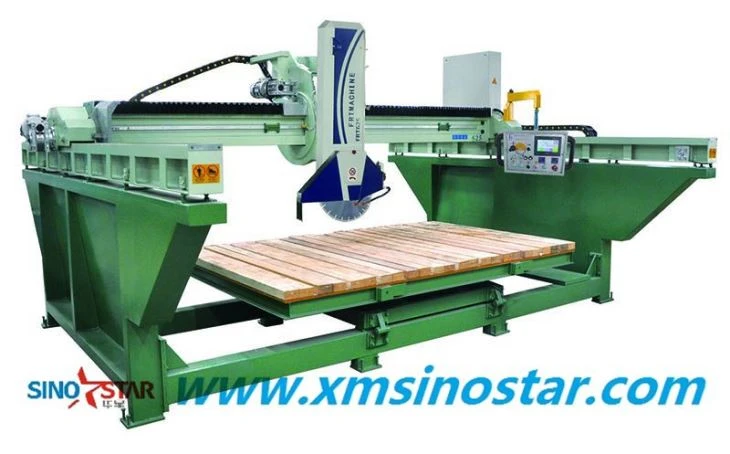

For more information on our related products, you can visit the following links:
CNC Stone Saw Machine
Bridge Miter Saw
Stone Granite Miter Saw Machine
We look forward to the opportunity to discuss your stone - cutting needs and how our Stone Bridge Saws can help you achieve your goals.
References
- "Materials Science and Engineering: An Introduction" by William D. Callister Jr. and David G. Rethwisch
- "Manufacturing Engineering and Technology" by S. Kalpakjian and S. R. Schmid
Send Inquiry