

What is the difference between a horizontal and vertical band saw machine?
Dec 16, 2025
Leave a message
A band saw machine is a versatile tool widely used in various industries, including woodworking, metalworking, and stone cutting. Among the different types of band saw machines, horizontal and vertical band saw machines are two common configurations, each with its own unique features and applications. As a band saw machine supplier, we understand the importance of choosing the right machine for your specific needs. In this blog post, we will explore the key differences between horizontal and vertical band saw machines to help you make an informed decision.
Structure and Design
The most obvious difference between horizontal and vertical band saw machines lies in their structure and design. A horizontal band saw machine has a blade that moves horizontally through the workpiece. This design allows for large - scale cutting operations and is particularly suitable for cutting long and flat materials. The workpiece is typically placed on a table or fixture, and the blade descends or moves across the material to make the cut.
On the other hand, a vertical band saw machine has a blade that moves vertically. It is often used for more intricate and detailed cutting tasks, such as cutting curves or irregular shapes. The workpiece is held stationary, and the operator moves the material against the blade for cutting. The vertical orientation of the blade provides better visibility and control during the cutting process, making it ideal for tasks that require precision.
Cutting Applications
The cutting applications of horizontal and vertical band saw machines also vary significantly. Horizontal band saw machines are commonly used for rough cutting and mass production. They can efficiently cut large workpieces, such as logs in the wood industry, large metal bars, and pipes in the metalworking industry. Their ability to handle heavy - duty cutting tasks makes them a popular choice for industrial applications where high - volume production is required.
For instance, in a large - scale furniture manufacturing plant, a horizontal band saw machine can quickly cut large pieces of wood into the required lengths, significantly increasing the production efficiency. In the stone industry, horizontal band saws are used for cutting large blocks of stone into slabs. You can explore our Stone Horizontal Slice Machine which is optimized for such stone - cutting applications.
Vertical band saw machines, however, are better suited for more precise cutting operations. They excel at cutting curves, contours, and small - scale workpieces. In woodworking, a vertical band saw can be used to create intricate wooden designs, such as the scrollwork on furniture or decorative pieces. In the metalworking field, it can cut small metal parts with high precision. The stone industry also benefits from vertical band saws for detailed cutting of stone pieces. Our Stone Band Saw Slicing Machine is designed to meet the precise stone - cutting requirements, whether for creating decorative stone elements or making precise cuts in smaller stone blocks.
Material Handling
Material handling is another aspect where horizontal and vertical band saw machines differ. With a horizontal band saw machine, loading and unloading large and heavy workpieces are relatively easier. The horizontal table provides a stable platform for placing the material, and some models may even be equipped with automatic material feeding systems, which further facilitate the handling of large - scale workpieces. This makes it an efficient option for industries dealing with bulky materials.
In the case of vertical band saw machines, handling smaller and lighter workpieces is more straightforward. Since the operator has to move the material against the blade, it is easier to manipulate smaller pieces. However, when dealing with larger and heavier materials, vertical band saws may pose challenges in terms of handling and positioning.
Space Requirements
Space is also a crucial consideration when choosing between a horizontal and a vertical band saw machine. Horizontal band saw machines generally require more floor space due to their large - scale cutting capabilities and the need for a stable platform to support the workpiece. The design of horizontal band saws often involves a large table and a wide base, which takes up a significant amount of room in a workshop or industrial facility.
Vertical band saw machines, on the contrary, have a more compact design. They do not require as much floor space as horizontal band saws, making them a suitable choice for smaller workshops or spaces with limited room. If you have a tight working area but still need a band saw machine for your cutting needs, a vertical band saw could be the better option.
Blade Tension and Maintenance
Blade tension is an important factor that affects the cutting performance of a band saw machine. In a horizontal band saw machine, the blade tension is often easier to adjust because of the horizontal orientation. This makes it more convenient for operators to maintain the proper tension of the blade, which is crucial for achieving clean and accurate cuts.
In a vertical band saw machine, adjusting the blade tension may be a bit more challenging due to the vertical structure. However, with proper training and regular maintenance, operators can ensure that the blade tension is correctly set to maintain optimal cutting performance.
When it comes to maintenance, horizontal band saw machines usually have more components that are exposed and easier to access for cleaning, lubrication, and replacement. Vertical band saw machines may require more careful disassembly and reassembly for maintenance tasks, but they generally have a simpler structure overall.
Cost
The cost of horizontal and vertical band saw machines can also vary. Horizontal band saw machines, especially those with large - scale cutting capabilities and advanced features such as automatic feeding systems, tend to be more expensive. This is because they are designed for heavy - duty industrial applications and require more robust construction and components.
Vertical band saw machines, being more suitable for smaller - scale and precise cutting tasks, usually come at a lower cost. However, the price can still vary depending on the brand, quality, and additional features of the machine.
Conclusion
In conclusion, the main differences between horizontal and vertical band saw machines lie in their structure, cutting applications, material handling, space requirements, blade tension and maintenance, and cost. Horizontal band saw machines are ideal for large - scale, rough cutting operations in industries such as wood, metal, and stone. They offer high - volume production capabilities and are well - suited for handling heavy and bulky materials. On the other hand, vertical band saw machines are better for precise, detailed cutting tasks and are more suitable for smaller - scale workpieces.
If you are looking for a band saw machine for your specific cutting needs, whether it is for woodworking, metalworking, or stone cutting, we have a wide range of options to choose from. Our Marble Granite Band Saw Machine is just one example of our high - quality products. We are dedicated to providing you with the best band saw machines that meet your requirements.
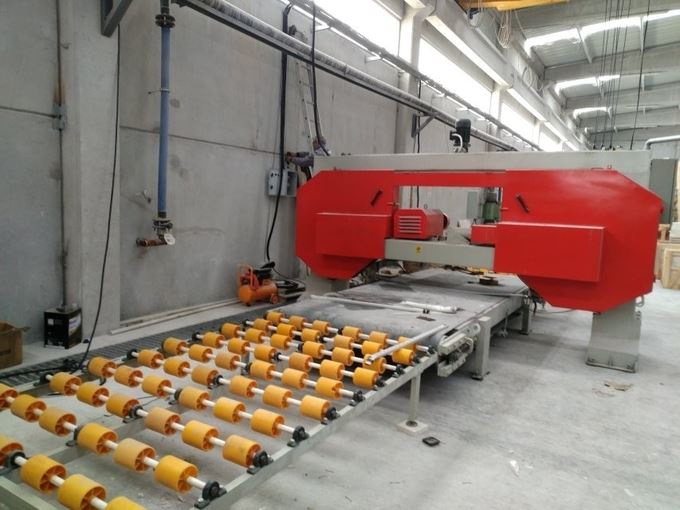

If you are interested in learning more about our band saw machines or would like to discuss your specific needs, please feel free to contact us for a detailed consultation. We are here to help you make the right choice and ensure that you get the most out of your band saw machine investment.
References
- Woodworking Machinery Handbook
- Metalworking Technology Textbooks
- Stone Cutting and Processing Industry Reports
Send Inquiry