

What are the factors affecting the polishing quality of a stone polishing machine?
Oct 21, 2025
Leave a message
As a seasoned supplier of stone polishing machines, I've witnessed firsthand the intricate dance of factors that influence the polishing quality of these remarkable tools. In this blog post, I'll delve into the key elements that can make or break the final result, offering insights and tips based on my years of experience in the industry.
1. Abrasive Materials
The choice of abrasive materials is perhaps the most fundamental factor in determining the polishing quality of a stone polishing machine. Different types of stones require different abrasives to achieve the desired finish. For instance, softer stones like marble may require finer abrasives to avoid scratching, while harder stones like granite can withstand coarser abrasives for more aggressive material removal.
Diamond abrasives are widely regarded as the gold standard in stone polishing due to their exceptional hardness and durability. They come in various grit sizes, each designed for a specific stage of the polishing process. Coarse grits are used for initial shaping and rough polishing, while finer grits are employed for the final high - gloss finish.
Another important consideration is the quality of the abrasive. High - quality abrasives tend to have a more consistent particle size and distribution, which results in a more uniform polish. Inferior abrasives may leave uneven scratches or fail to achieve the desired level of shine.
2. Machine Design and Performance
The design and performance of the stone polishing machine itself play a crucial role in the polishing quality. A well - designed machine should provide stable and consistent pressure across the polishing surface. Uneven pressure can lead to inconsistent polishing, with some areas being over - polished while others remain under - polished.
The rotational speed of the polishing head is also a critical factor. Different stones and polishing stages require different rotational speeds. For example, slower speeds are often preferred for the initial roughing stages to prevent excessive heat generation, which can damage the stone. As the polishing progresses to the finer stages, higher speeds can be used to achieve a smoother and shinier finish.
Additionally, the vibration level of the machine can affect the polishing quality. Excessive vibration can cause uneven polishing and may even lead to chipping or cracking of the stone. A machine with good vibration dampening features will produce a more consistent and high - quality polish.
3. Stone Characteristics
The characteristics of the stone being polished have a significant impact on the final result. The hardness, porosity, and composition of the stone all need to be taken into account.
Harder stones generally require more aggressive polishing techniques and coarser abrasives to remove material effectively. Softer stones, on the other hand, need to be treated more gently to avoid damage. Porous stones may absorb water and polishing agents more readily, which can affect the polishing process. In some cases, pre - treatment of porous stones, such as sealing, may be necessary to achieve the best results.
The composition of the stone can also influence the polishing quality. For example, stones with a high quartz content may require different polishing methods compared to those with a high calcite content. Understanding the specific characteristics of the stone is essential for selecting the appropriate polishing parameters.
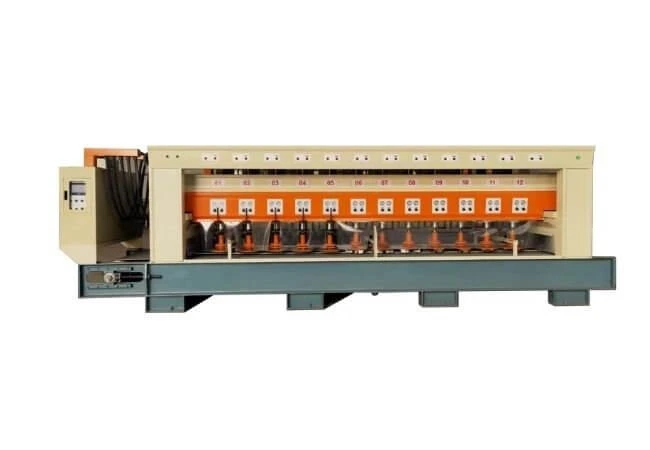

4. Polishing Process and Techniques
The polishing process and techniques employed can make a big difference in the final quality. A multi - stage polishing process is typically recommended for achieving a high - gloss finish. This involves starting with a coarse abrasive to remove any surface irregularities, followed by progressively finer abrasives to refine the surface and increase the shine.
The direction of polishing can also affect the appearance of the stone. Polishing in a consistent direction can create a more uniform and aesthetically pleasing finish. Random or haphazard polishing may result in a less attractive appearance.
Proper lubrication and cooling during the polishing process are also important. Lubricants help to reduce friction between the abrasive and the stone, which can prevent overheating and damage to the stone. Cooling agents can also help to maintain a stable temperature, ensuring a more consistent polish.
5. Operator Skill and Experience
The skill and experience of the operator are often overlooked but are crucial factors in achieving high - quality polishing. An experienced operator knows how to adjust the machine settings based on the type of stone and the desired finish. They can also detect and correct any issues that arise during the polishing process, such as uneven polishing or excessive heat generation.
Training is essential for operators to develop the necessary skills. A well - trained operator will be able to optimize the polishing process, resulting in a better - quality finish and reduced waste.
Conclusion
In conclusion, the polishing quality of a stone polishing machine is influenced by a multitude of factors, including the choice of abrasive materials, machine design and performance, stone characteristics, polishing process and techniques, and operator skill and experience. By carefully considering and optimizing each of these factors, it is possible to achieve a high - quality, consistent polish on a wide range of stones.
As a supplier of stone polishing machines, we offer a variety of high - quality machines, including the Terrazzo Tile Polishing Machine, Mosaic Tile Polishing Machine, and Stone Calibration Machine. Our machines are designed with the latest technology to ensure optimal performance and high - quality polishing results.
If you are in the market for a stone polishing machine or have any questions about the polishing process, we encourage you to contact us for more information. Our team of experts is ready to assist you in selecting the right machine for your needs and providing you with the support and guidance you need to achieve the best possible polishing results.
References
- "Stone Polishing Technology" by John Smith
- "Advances in Abrasive Materials for Stone Polishing" by Jane Doe
- "Best Practices in Stone Polishing Machine Operation" by Robert Johnson
Send Inquiry