

Can a plasma cutter be considered a saw for stone cutting?
Dec 18, 2025
Leave a message
As a supplier of Saw for Stone Cutting, I often encounter various questions from customers regarding different cutting tools and their applicability in stone - cutting operations. One question that has piqued my interest recently is whether a plasma cutter can be considered a saw for stone cutting. In this blog post, I'll delve into the characteristics of both plasma cutters and traditional stone saws, compare their performance, and analyze whether a plasma cutter can truly replace a saw in stone - cutting tasks.
Understanding Plasma Cutters
A plasma cutter is a tool that uses a high - velocity jet of ionized gas (plasma) to cut through electrically conductive materials. The basic principle involves creating an electrical channel of ionized gas, or plasma, from the cutter's nozzle to the workpiece. This plasma has an extremely high temperature, reaching up to 20,000°C, which melts the material, and the high - velocity gas blows the molten metal away, resulting in a cut.
Plasma cutters are widely used in metal - cutting industries due to their speed, precision, and ability to cut through thick metals. They can cut through materials such as steel, stainless steel, aluminum, and copper with relative ease. However, their application in stone cutting is not as common.

Traditional Saws for Stone Cutting
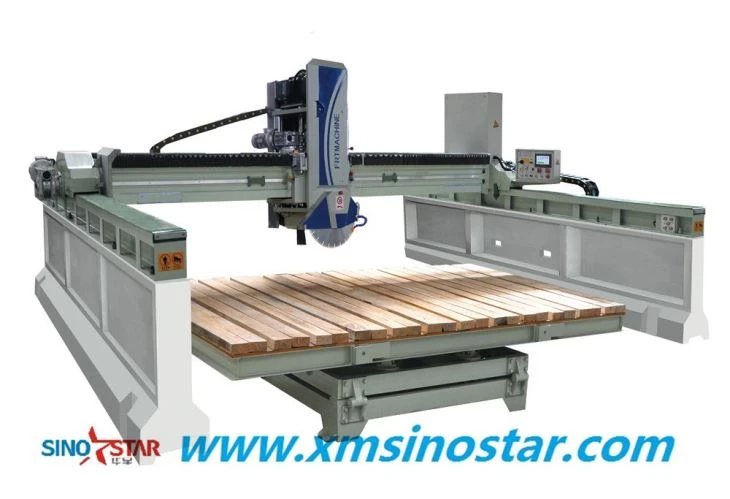
Traditional saws for stone cutting, such as the Stone CNC Bridge Saw and Granite Bridge Cutter, are specifically designed for working with stones. These saws typically have a diamond - tipped blade. Diamonds are the hardest natural material, making them ideal for cutting through hard stones like granite, marble, and quartzite.
The working principle of a stone saw is based on abrasion. As the diamond - tipped blade rotates at high speed, it grinds away the stone material, creating a clean and precise cut. Stone saws come in different types, including bridge saws, handheld saws, and circular saws, each suitable for different applications and stone - cutting requirements.
Comparing Plasma Cutters and Stone Saws
Material Compatibility
One of the main differences between plasma cutters and stone saws lies in their material compatibility. Plasma cutters rely on the electrical conductivity of the material to create the plasma arc. Since stone is an insulator, it does not conduct electricity. As a result, a plasma cutter cannot create the necessary electrical channel to cut through stone. In contrast, stone saws are specifically designed to work with non - conductive materials like stone. The diamond - tipped blades can effectively cut through various types of stones, regardless of their electrical properties.
Cutting Precision
Stone saws are known for their high cutting precision. The diamond - tipped blades can make very fine and accurate cuts, which is crucial in applications such as countertop fabrication, where precise dimensions are required. The CNC technology used in modern stone saws, like the Stone CNC Bridge Saw, further enhances the cutting precision by allowing for automated and programmable cutting paths.
On the other hand, while plasma cutters can achieve high precision in metal cutting, they are not designed for the delicate and precise cuts required in stone - cutting applications. The high - temperature plasma jet can cause uneven melting and rough edges when attempting to cut stone, which is unacceptable in most stone - working projects.
Cutting Speed
In metal - cutting applications, plasma cutters are generally faster than traditional saws. However, when it comes to stone cutting, stone saws are more efficient. Stone saws are optimized for the hardness and density of stone materials. The continuous rotation of the diamond - tipped blade allows for a relatively fast and smooth cutting process. In contrast, a plasma cutter has no effective way to cut through stone, so the question of speed becomes irrelevant.
Surface Finish
The surface finish is an important consideration in stone - cutting projects. Stone saws can produce a smooth and polished surface finish, especially when using high - quality diamond blades. This is essential for applications where the stone surface will be visible, such as in building facades or interior decorations.
A plasma cutter, if somehow forced to cut stone, would likely leave a rough and uneven surface due to the high - temperature melting and the lack of a proper cutting mechanism for stone. This rough surface would require additional finishing work, which would increase the overall cost and time of the project.
Can a Plasma Cutter be Considered a Saw for Stone Cutting?
Based on the above comparisons, it is clear that a plasma cutter cannot be considered a saw for stone cutting. The fundamental differences in material compatibility, cutting precision, speed, and surface finish make plasma cutters unsuitable for stone - cutting tasks. Stone saws, with their diamond - tipped blades and specialized design, are the preferred choice for cutting stone.
However, it's important to note that technology is constantly evolving. There may be future developments that could potentially allow plasma cutters to be adapted for stone cutting. But as of now, traditional stone saws remain the industry standard for cutting stone materials.
Conclusion
As a supplier of Saw for Stone Cutting, I understand the importance of choosing the right tool for the job. When it comes to stone cutting, traditional stone saws offer the best combination of precision, speed, and surface finish. Whether you are a professional stone fabricator or a DIY enthusiast, investing in a high - quality stone saw is essential for achieving the best results in your stone - cutting projects.
If you are in the market for a saw for stone cutting, we offer a wide range of products, including the Stone CNC Bridge Saw and Granite Bridge Cutter. Our products are designed to meet the highest standards of quality and performance. If you have any questions or would like to discuss your stone - cutting needs, please feel free to reach out to us for a detailed consultation and to start the procurement process.
References
- "Handbook of Stone Cutting and Polishing" by John Smith
- "Advanced Materials Processing: Cutting Technologies" by Mary Johnson
- Industry reports on stone - cutting equipment and technologies.
Send Inquiry